
Uncategorized
IQF Frozen Fruit Supplier: A B2B Buyer’s Sourcing Guide
Aug
An IQF frozen fruit supplier must offer more than a list of available fruits. International buyers also need clear product specifications, appropriate formats, reliable documentation, suitable packaging and workable cold-chain logistics. These factors determine whether a product can support wholesale distribution, industrial processing, food service or retail programmes.
This guide explains how importers, distributors, food manufacturers, supermarket procurement teams and international trading companies can evaluate suppliers without relying on price alone. It also covers the information buyers should include in a quotation request so that offers can be compared on a consistent commercial basis.
If you are new to the freezing method itself, begin with our guide explaining what IQF fruit is and how individual quick freezing works. This article focuses on the next stage: selecting an IQF frozen fruit supplier for a professional B2B purchasing programme.
What should an IQF frozen fruit supplier provide?
IQF means individually quick frozen. Fruit is prepared and frozen so that pieces can remain separate rather than becoming one solid block. However, the letters “IQF” describe a processing approach; they do not establish one universal grade, origin, variety, certification or quality tolerance.
A capable IQF frozen fruit supplier should help a buyer establish whether the available product matches the intended commercial use. Depending on the enquiry, that discussion may include:
- Fruit type and variety, where relevant
- Country or approved countries of origin
- Whole, sliced, diced, chunked, segmented or crumble format
- Piece dimensions or size range where commercially important
- Expected appearance and sensory characteristics
- Ingredient and allergen information
- Packaging and labelling options
- Available product and quality documentation
- Storage and cold-chain requirements
- Order quantity, destination and requested delivery period
Every item must be confirmed for the specific offer. Product availability and specifications can change with crop conditions, processor capacity, approved origin and the buyer’s destination market.
Why B2B buyers source IQF frozen fruit
IQF fruit can support production environments that need portionable frozen ingredients and consistent handling. Because pieces are frozen individually, users may be able to remove the quantity needed while keeping the remaining product frozen, subject to their own operating procedures and the product specification.
Commercial applications may include bakery products, dairy preparations, ice cream, desserts, beverages, smoothies, sauces, fillings, jams, food-service menus and prepared foods. Suitability is not automatic. The manufacturer must assess the selected fruit, cut format and specification against its formulation, process, equipment and destination-market obligations.
Buyers may work with an IQF frozen fruit supplier for one product or combine several frozen-fruit requirements within a broader procurement relationship. Consolidation can simplify communication, but only when each line is individually approved and documented.
Common products and commercial formats
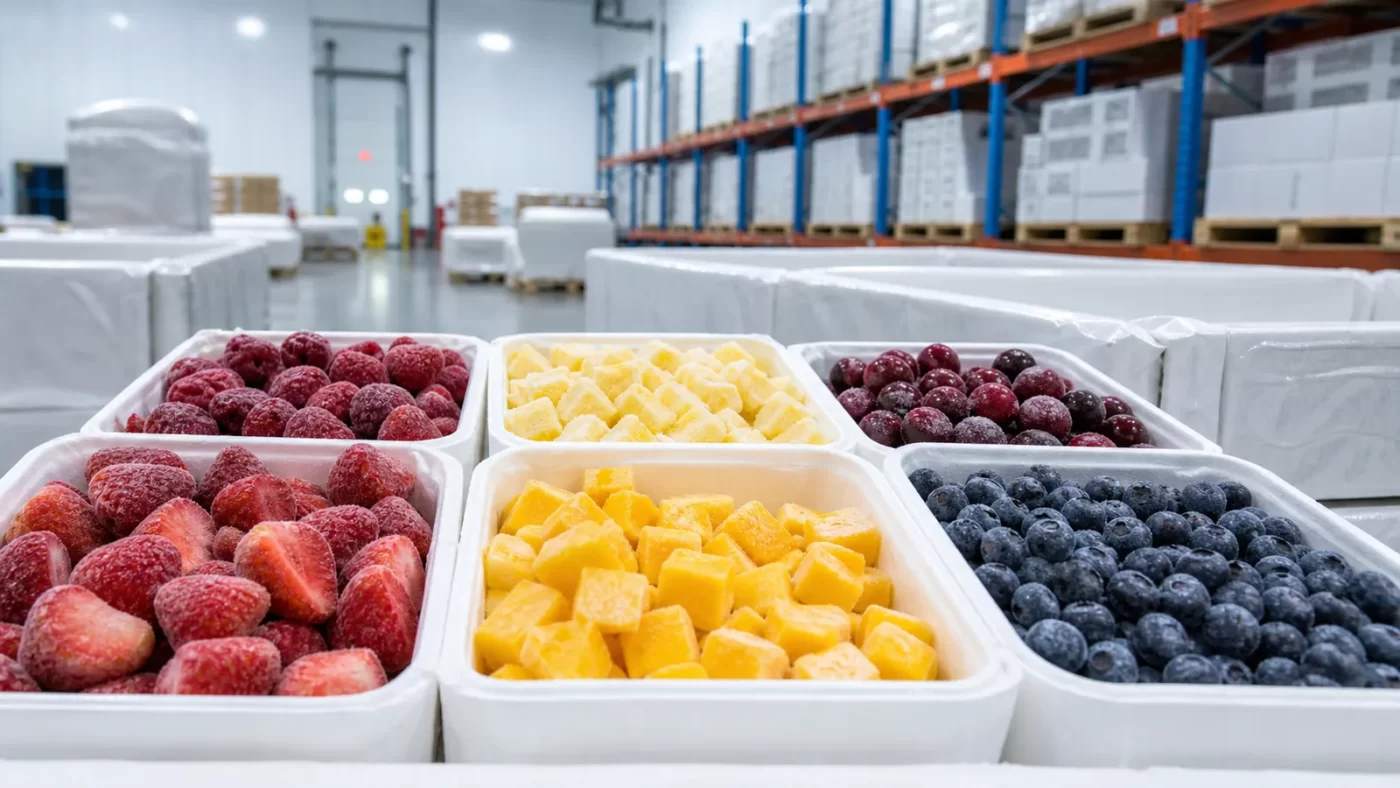
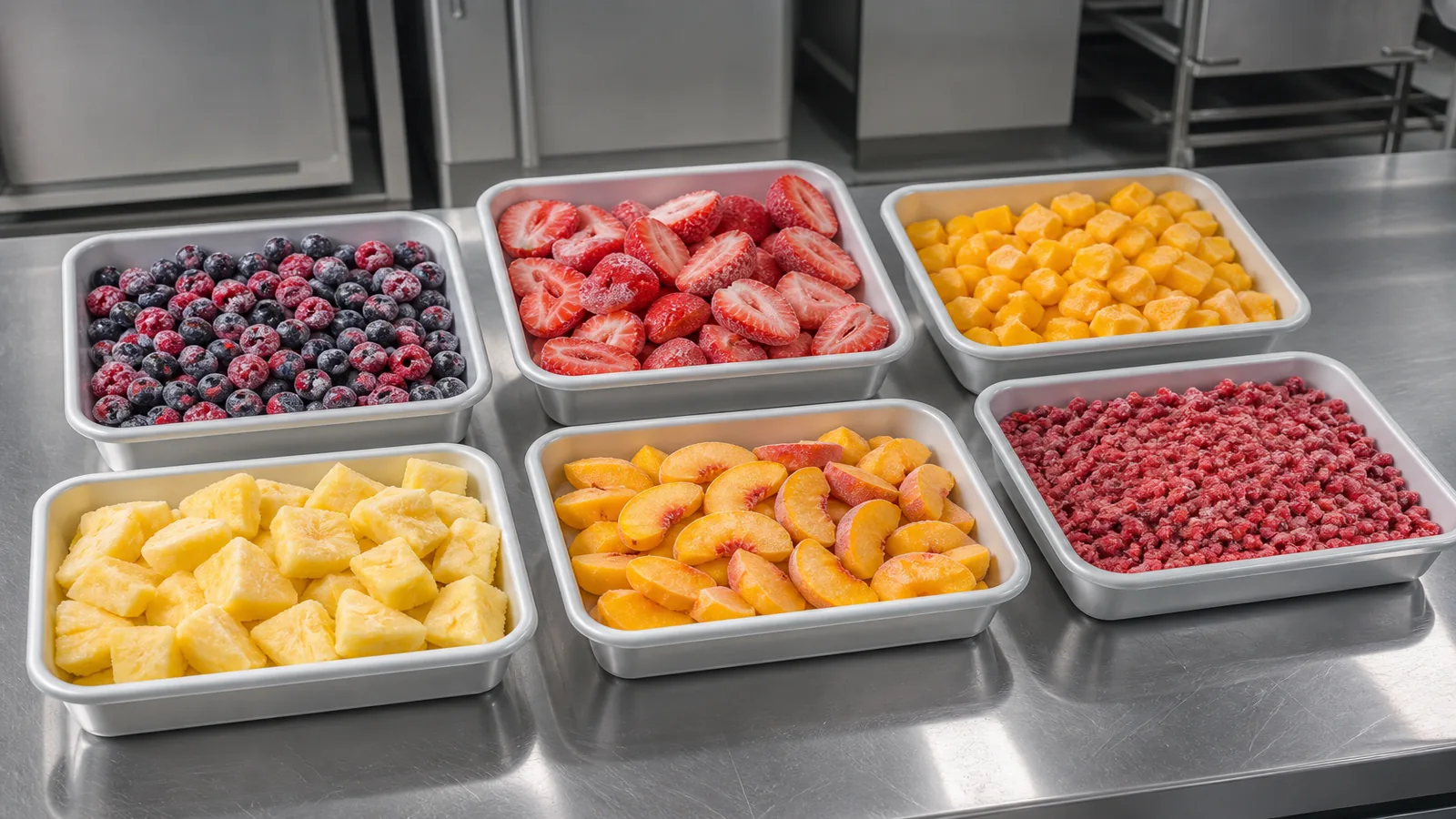
Wholesale frozen-fruit programmes can include berries, tropical fruits, stone fruits and mixed-fruit combinations. Examples include strawberries, blueberries, raspberries, blackberries, mango, pineapple, guava, kiwi, apricot, peaches, figs, cherries and pomegranate. TG-Trading B.V. buyers can review the broader IQF Frozen Fruits category before sending an enquiry.
Berries
Berries may be offered whole, sliced, halved or in crumble form, depending on the fruit and processor. Buyers should define how much breakage is acceptable and whether the product will be used as a visible inclusion, blended ingredient or further-processed component. Examples in the current catalogue include IQF Strawberries.
Tropical fruit
Mango, pineapple and guava may be discussed in diced, chunked, sliced or other formats. A buyer requesting IQF Mango should state the intended use and preferred format instead of assuming that every supplier uses identical dimensions or variety descriptions.
Stone fruit and other varieties
Apricot, peach and cherry products can require specific discussions about halves, slices, dices, pieces or pitted forms. Buyers interested in IQF Apricot should request the current product description and available specification.
How to evaluate an IQF frozen fruit supplier
Supplier evaluation should begin with the product and application, not with a generic request for the lowest price. The following checks help buyers compare offers fairly.
1. Define the intended application
Tell the IQF frozen fruit supplier whether the product is intended for bakery production, dairy processing, beverages, retail packing, food service or another commercial use. The intended application influences the appropriate format, tolerance discussions, packing arrangement and documents required.
2. Compare like-for-like specifications
Two quotations with the same product name may describe different offers. Origin, variety, cut dimensions, broken-piece tolerance, colour, ingredient declaration, packing and commercial terms can all vary. Build a comparison table and record every difference rather than treating the product title as the complete specification.
3. Confirm origin and supply flexibility
Some procurement programmes require a named origin, while others can consider several approved origins. A broader origin strategy may improve sourcing flexibility, but alternatives must still satisfy the buyer’s internal requirements, customer commitments and destination-market rules. Never assume that an origin offered previously remains available for a future shipment.
4. Review the documentation process
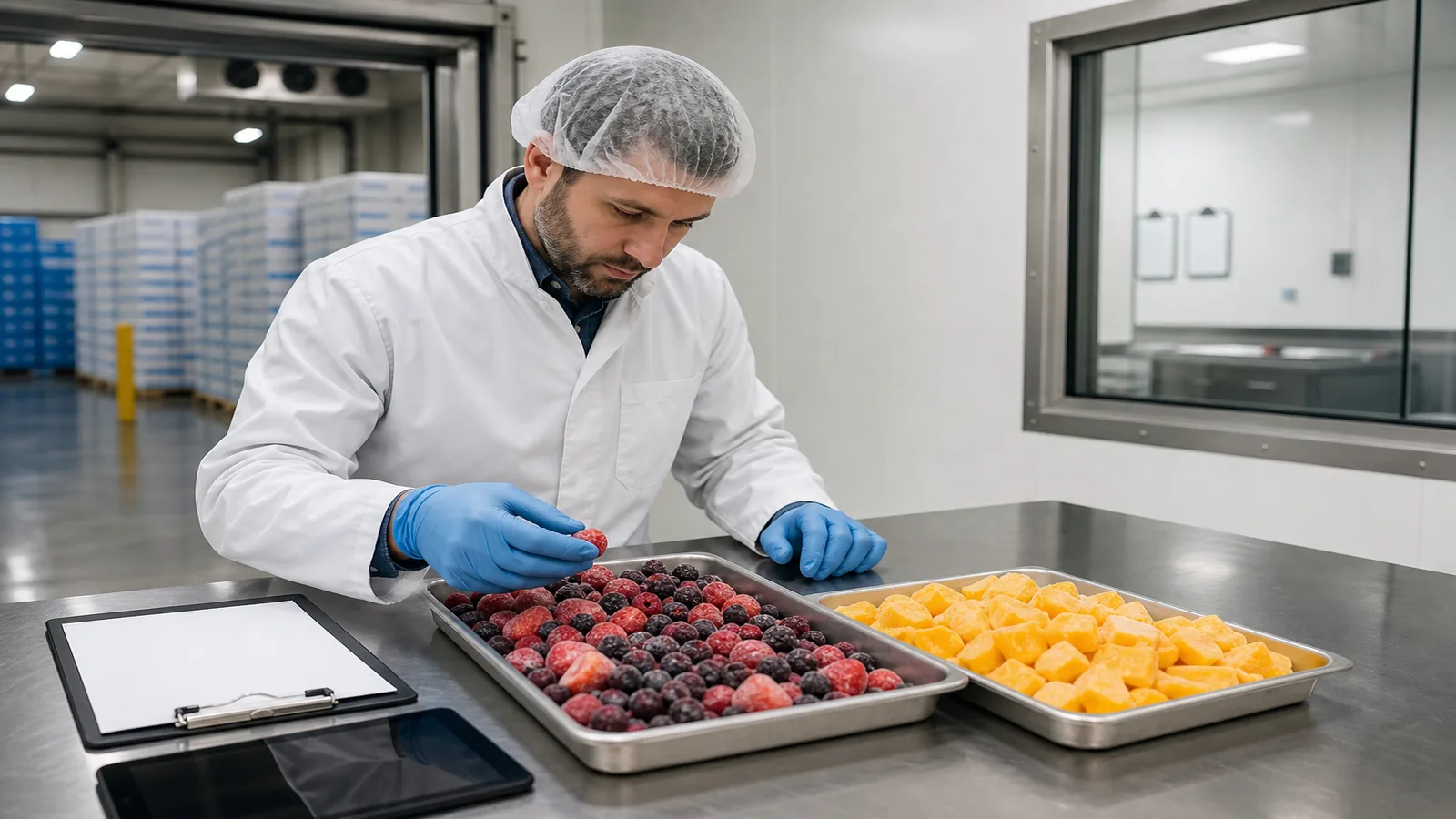
Ask which documents can be supplied for the specific product and shipment. Possible documents may include a product specification, ingredient statement, allergen information, packing details, storage guidance, traceability information, origin documentation and shipment-specific records. Certificates or laboratory results should only be requested and represented when they apply to the relevant product, processor and lot.
5. Assess communication and change control
A professional IQF frozen fruit supplier should distinguish confirmed information from information still subject to availability. Buyers should also agree how material changes to origin, processor, format, specification or packaging will be communicated before an order is finalized.
Food safety, traceability and compliance
Regulatory and customer requirements depend on the product, origin, processing site, buyer and destination market. A blog article cannot replace a buyer’s legal, technical or quality review, but several authoritative resources help procurement teams identify the right questions.
- The FAO/WHO Codex Alimentarius Code of Practice for the Processing and Handling of Quick Frozen Foods provides international guidance covering receiving, preparation, processing, storage, transport and distribution.
- The European Commission explains General Food Law requirements and food traceability for the EU market.
- The EUR-Lex overview of EU rules for quick-frozen food summarizes relevant freezing, packaging, labelling and official-control provisions.
- For applicable United States programmes, the FDA provides information about the Food Traceability Rule and its additional recordkeeping framework for listed foods.
- The International Organization for Standardization offers an overview of ISO 22000 food safety management. Buyers should verify any claimed certification directly for the relevant organization and scope.
These sources are useful starting points, not proof that a particular product or supplier satisfies a buyer’s requirements. An IQF frozen fruit supplier should provide product-specific information, while the buyer remains responsible for confirming suitability and compliance.
Packaging, labelling and bulk orders
Packaging options vary by product, processor, quantity and market. They may include food-service packs, industrial inner bags with outer cartons, retail-ready arrangements or private-label formats. Exact pack weight, materials, carton dimensions and pallet configuration must be confirmed for the selected offer.
When contacting an IQF frozen fruit supplier for bulk supply, describe how the product will be received, stored, opened, portioned and used. A food manufacturer may prioritize efficient industrial handling, while a distributor may require a pack suitable for resale to food-service customers. Retail and private-label enquiries introduce additional artwork, language and labelling considerations.
Do not assume that a packaging image represents the final supply configuration. Request current packing information and an approved label or artwork process where relevant.
Cold-chain storage and international logistics
Frozen-fruit supply depends on coordinated temperature-controlled handling from processing through storage, loading, transit and delivery. The Codex quick-frozen-food guidance emphasizes continuity of the cold chain, while market-specific rules may establish additional requirements.
An IQF frozen fruit supplier needs accurate destination information before evaluating a shipment. Buyers should provide the destination country, delivery location, receiving facilities, requested commercial terms and preferred delivery period. They should also confirm that their warehouse and downstream distribution partners can handle the product under the required frozen conditions.
Logistics planning may involve pallet configuration, container planning, loading schedules, customs procedures, shipment documentation and contingency communication. The final arrangement depends on origin, destination, quantity and the parties’ agreed responsibilities.

Trade terms and destination-market research
International quotations should clearly state the proposed trade term and named place. The International Chamber of Commerce explains how Incoterms® rules help allocate tasks, costs and risks between sellers and buyers. Parties should use the appropriate current rule and define responsibilities in the contract rather than relying on informal assumptions.
EU importers can also use the European Commission’s Access2Markets portal as a starting point for tariffs, procedures and product requirements. Requirements vary, so buyers should verify the correct commodity classification and consult qualified customs, regulatory or legal professionals when necessary.
How to request a useful supplier quotation
A vague message asking for “your best IQF fruit price” usually produces follow-up questions rather than a comparable offer. Give the IQF frozen fruit supplier enough information to check availability and match the enquiry to a realistic supply option.
- Product: fruit name and variety where relevant.
- Format: whole, halves, slices, dices, chunks, pieces or another required form.
- Application: bakery, dairy, beverage, food service, retail packing or another intended use.
- Specification: buyer specification or key requirements that must be reviewed.
- Quantity: estimated order quantity and whether the enquiry is trial, spot or programme-based.
- Packaging: preferred pack format, labelling needs and private-label requirements where applicable.
- Destination: country, city or port and final delivery location.
- Documentation: product, quality, origin, traceability or shipment documents required.
- Timing: requested delivery period and any production planning constraints.
- Commercial terms: requested quotation basis and payment expectations for discussion.
If some details are not yet available, explain the buyer type and intended use. TG-Trading B.V. can review current possibilities, but availability, price, specification, packing and logistics remain subject to confirmation.
A practical supplier comparison scorecard
Procurement teams can create a simple scorecard to compare each IQF frozen fruit supplier. Weighting should reflect the buyer’s priorities rather than using the same score for every project.
| Review area | Questions for the buyer |
|---|---|
| Product match | Does the offered fruit, origin and format match the intended application? |
| Specification | Are tolerances and product characteristics clearly documented? |
| Documentation | Can the required current documents be provided and verified? |
| Packaging | Is the available pack suitable for handling, processing or distribution? |
| Logistics | Is the proposed cold-chain and delivery arrangement workable? |
| Communication | Are assumptions, exclusions and points requiring confirmation stated clearly? |
| Commercial fit | Are quantity, timing, quotation basis and payment discussions aligned? |
A scorecard does not replace technical approval or commercial due diligence. It creates a documented basis for comparing offers and identifying unresolved questions before commitment.
Common mistakes when sourcing IQF frozen fruit
Comparing price without comparing specifications
A lower price may relate to a different origin, format, tolerance, pack or delivery basis. Normalize quotations before making a commercial comparison.
Treating IQF as a quality grade
IQF describes individual quick freezing. The buyer must still agree the fruit specification, quality expectations and acceptance process with the IQF frozen fruit supplier.
Assuming certifications or origin
Never infer certification from a website category or another product. Request current verification for the relevant company, facility, scope and product. Origin must also be confirmed for the offered supply.
Leaving logistics until the end
Cold storage, loading, transit, customs and receiving capabilities affect feasibility. Discuss them while evaluating the offer, not after agreeing the product price.
Sending an incomplete enquiry
The more accurately a buyer describes product, format, application, quantity and destination, the more efficiently a supplier can evaluate the request.
Frequently asked questions
What is an IQF frozen fruit supplier?
An IQF frozen fruit supplier provides individually quick frozen fruit for commercial buyers such as importers, distributors, food processors, retail procurement teams and food-service wholesalers.
Can IQF fruit be supplied in bulk?
Bulk supply may be available depending on the fruit, format, origin, quantity, packaging and destination. Buyers should request current packing and availability information rather than assuming a standard bulk configuration.
What is the difference between IQF and block-frozen fruit?
IQF products are processed so that pieces can remain individually separated, while block-frozen products form a consolidated frozen mass. The preferred format depends on the buyer’s application and handling process.
Does IQF guarantee a particular grade?
No. IQF is a freezing description. Grade, variety, origin, dimensions, tolerances, composition, documentation and certification are separate matters that require confirmation.
Which documents should buyers request?
The required documents depend on the product, buyer and destination. They may include product specifications, ingredient and allergen information, packing details, traceability records, origin documents and shipment-specific records. Request only what is relevant and verify it for the offered supply.
Can an IQF frozen fruit supplier arrange international shipments?
International supply may be possible subject to product availability, destination requirements, order size, documentation, cold-chain logistics and agreed commercial terms. Each shipment requires individual evaluation.
How should a buyer choose between frozen fruit suppliers?
Compare each IQF frozen fruit supplier on product match, specification, documentation, packaging, communication, logistics and commercial terms. Price should be evaluated only after confirming that competing offers describe equivalent supply.
Contact TG-Trading B.V. for IQF frozen fruit supply
TG-Trading B.V. supports international B2B buyers seeking IQF frozen fruit for wholesale distribution, food manufacturing, retail procurement and food-service applications. Current products, origins, specifications, packaging and logistics depend on availability and the buyer’s destination requirements.
Contact TG-Trading B.V. with the required fruit, format, quantity, destination and documentation needs. Our sales team can review current availability and discuss the information needed for a wholesale quotation.
