
Seafood Buying Guides
Buying Frozen Fish Wholesale: Species, Glaze and Net Weight Explained
Sep
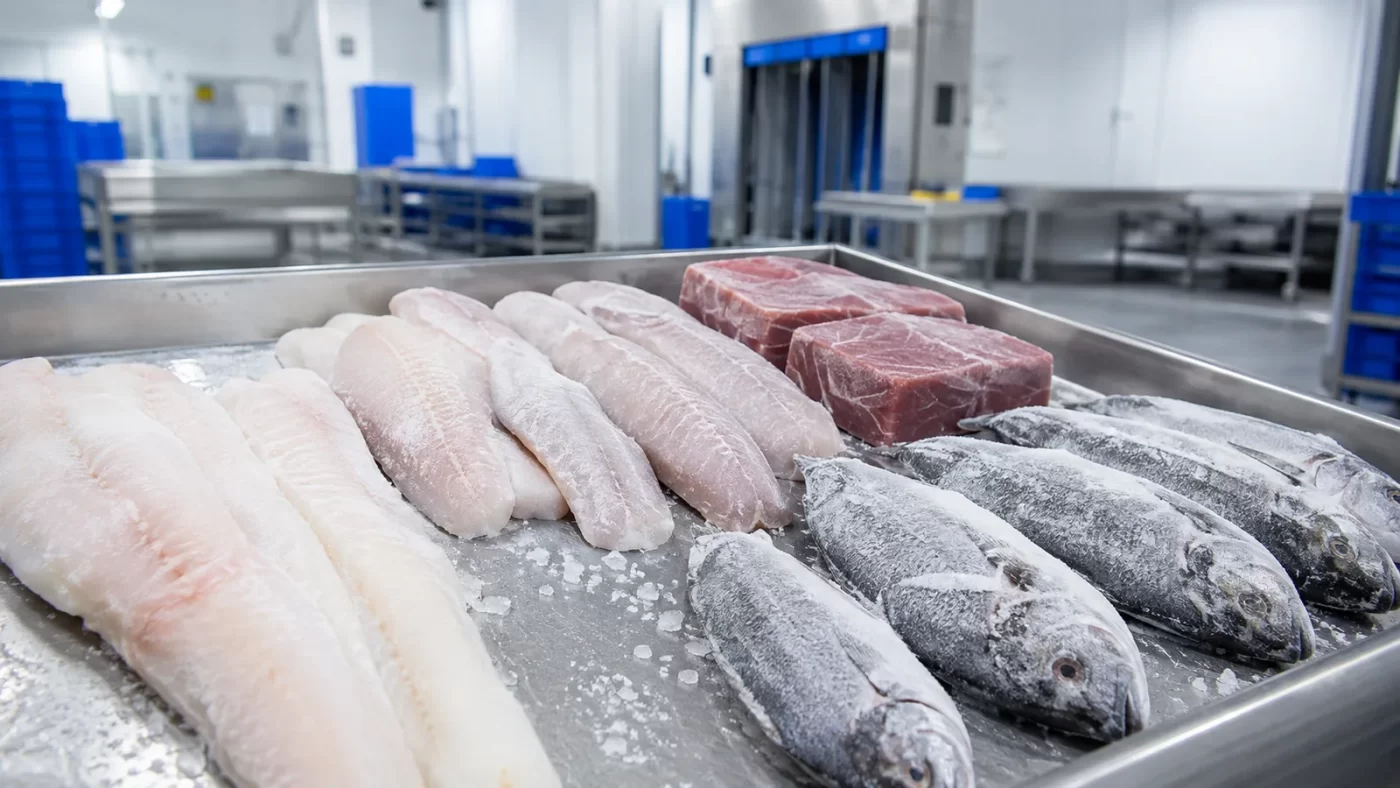
Buying frozen fish wholesale is not simply a matter of choosing a species and comparing a price per kilogram. Importers, distributors, food-service buyers and processors must compare the same product form, freezing method, glaze allowance, declared net weight, size grade, packing and destination requirements. If one of those fields differs, two apparently similar quotations may cover materially different products.
Quick answer: for frozen fish wholesale, a reliable comparison starts with the accepted species and scientific name, followed by the cut, skin and bone specification, freezing format, size range, glaze percentage, deglazed net weight, packaging and required shipment documents. Compare prices only after every supplier has answered the same purchasing brief.
This frozen fish wholesale guide explains how to evaluate frozen fish fillets, whole products, steaks and portions without mistaking ice protection or carton weight for usable fish. It is written for commercial buyers, not household shoppers. Current availability, origin, certification, specification, packing and shipment terms must be confirmed for the supply offered.
Start by reviewing the TG-Trading frozen fish range, then use the sections below to prepare a product-specific request for quotation.
Frozen fish wholesale buyer summary
| Decision | What to request | Why it matters |
|---|---|---|
| Species | Commercial and scientific name | Reduces ambiguity between fish sold under similar common names |
| Product form | Whole, headed and gutted, loin, steak, portion or fillet | Changes labour, yield and end use |
| Trim | Skin, bones, pin bones, belly flap and defect tolerances | Determines preparation requirements and usable output |
| Freezing | IQF, interleaved or block frozen; product temperature and cold-chain requirements | Affects separation, handling and storage |
| Glaze | Declared glaze percentage and method used to assess it | Distinguishes protective ice from fish weight |
| Weight | Net content, deglazed net weight and carton configuration | Allows equivalent price and yield comparisons |
| Size | Piece or fillet range and permitted variation | Supports portion control and process consistency |
| Documents | Product specification plus destination-specific health, origin and shipment records | Supports clearance and customer approval |
1. Define the application and destination market
In frozen fish wholesale, the best frozen fish supplier for one buyer may be unsuitable for another because their applications differ. A restaurant distributor may prioritise consistent portions, a retail packer may need attractive and uniform fillets, and a food manufacturer may focus on controlled trim and predictable usable yield. Describe the intended operation before asking which product is “best.”
Record whether the fish will be sold in its original carton, repacked, portioned, cooked or used as an ingredient. State the expected order quantity, repeat frequency and delivery destination. A frozen fish wholesale request remains incomplete until the supplier understands what the buyer means by bulk, how the goods will be received and which market rules apply.
Destination requirements must be treated as a separate workstream. Globally, the Codex Standard for Quick Frozen Fish Fillets provides a useful reference for product identity, freezing, glazing, quality and labelling. It does not replace the law, border controls or customer requirements that apply to a particular shipment.
For buyers in the European Union, including the Netherlands, the European Commission’s Access2Markets guidance for animal and fish products is a starting point for understanding approved countries and establishments, certification and official controls. United States importers should review the FDA seafood HACCP guidance. Great Britain has separate fishery-product import guidance.
For frozen fish wholesale, mark each requirement as essential, preferred or open to an alternative. This helps a supplier propose an appropriate format without silently changing an important condition. It also prevents a high-volume search for wholesale fish from turning into a quotation for a product your customer cannot accept.
2. Confirm the species and product identity
In frozen fish wholesale, a commercial name is not always enough to identify fish. Ask for both the commercial name and scientific name on the specification and supporting documents. EU buyers can use the European Commission’s commercial and scientific fish names database to investigate accepted names by Member State.
This check is important in a frozen fish wholesale comparison across several origins. Similar common names can be applied differently, and a generic description such as fish frozen for export does not establish species identity. Your order, specification, labels and certificates should describe the product consistently.
Species selection should follow the intended application. Ask the culinary, production or customer team what texture, appearance, portion shape and preparation behaviour are required. Then compare representative samples under the same conditions. Search popularity does not establish suitability: a widely searched fish fillet is not automatically the right material for every operation.
Cod is a practical example. A request for Frozen Cod Fillets should still define the species offered, fillet size, skin and bone presentation, freezing method, glaze, packing and documentation. Buyers considering a different presentation can also review Traditional Cod Fillets. References to frozen cod, frozen cod fish or a frozen cod fillet are starting descriptions, not complete specifications.
In frozen fish wholesale procurement, do not infer origin or fishing method from a product name or illustration. Request the evidence required by your customer and destination, and confirm what applies to the actual offered lot. The same rule applies when a quotation refers broadly to frozen fish products without naming the species and product form.
3. Choose whole fish, loins, steaks, portions or fillets
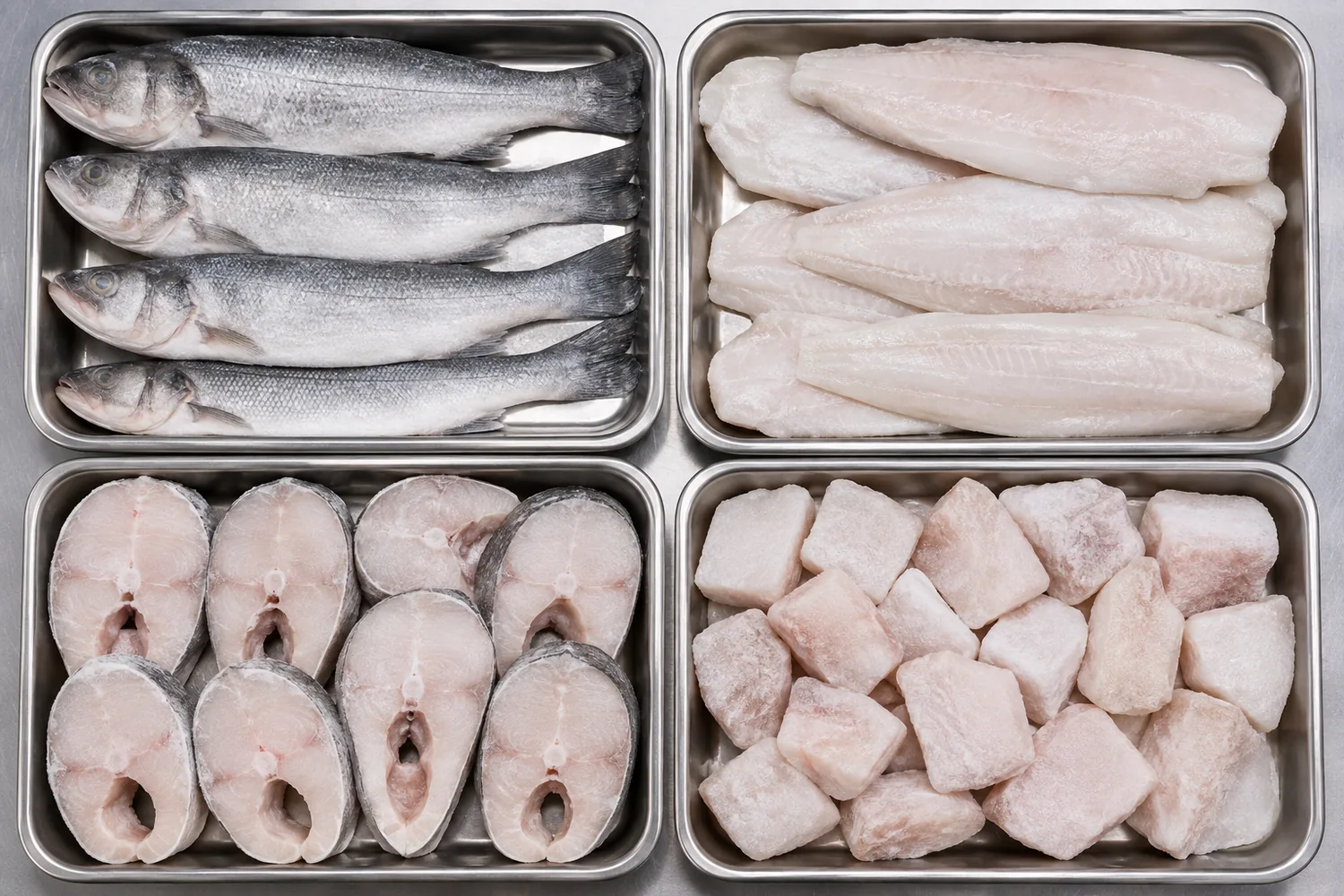
For frozen fish wholesale buyers, product form controls how much work remains after delivery. Whole fish may give a processor more control over cutting but requires suitable labour, equipment and waste handling. A prepared fish fillet can reduce cutting steps, while a steak, loin or portion may support more consistent service. The correct choice depends on your operation and customer promise.
| Format | Commercial advantage | Buyer check |
|---|---|---|
| Whole or headed and gutted | More cutting flexibility | Condition, size, dressing, yield capability and waste handling |
| Fillet | Less primary cutting and easier portion planning | Skin, pin bones, trim, size and glaze |
| Loin | Defined central cut for selected applications | Shape, dimensions, trim and allowable variation |
| Steak | Cross-cut format ready for further preparation | Thickness, weight range, bones and appearance |
| Portion | Repeatable unit handling | Piece-weight tolerance and pack count |
| Pieces or trimmings | Potential fit for manufacturing applications | Composition, size distribution and intended use |
In frozen fish wholesale, when buyers ask, “what are fish fillets?”, the direct answer is that they are portions cut lengthwise from the sides of a fish, but their commercial presentation varies. They may be skin-on or skinless, pin-bone-in or pin-bone-out, trimmed to different standards and supplied in different size bands. “Boneless fish fillets” should therefore be tied to an agreed bone tolerance rather than treated as a vague marketing phrase.
Different spellings appear in search data, including frozen fish filets and “filet fish.” Use the technically accurate product description in the contract instead of repeating every spelling on labels or specifications. The article can acknowledge those terms once while keeping the buyer language clear.
For white-fish applications, buyers can compare Frozen Pangasius Fillets, Hake Fillets and Monk Fish Fillets. These links identify product discussions; they do not imply that the species are interchangeable. Test the offered filleted fish against the application and approved specification.
For portioned formats, Frozen Tuna Steaks illustrates why the cut description belongs in the enquiry. A buyer asking only for fish fillets frozen in cartons may receive offers that differ in cut, shape, size and intended use.
4. Compare IQF, interleaved and block-frozen formats
For frozen fish wholesale operations, freezing format affects how product can be separated and handled. Individually quick frozen pieces are intended to remain separate when properly produced, packed and stored. Interleaving may help separate layers, while block-frozen fish is handled as a frozen unit. None is universally superior; the operational need determines the best format.
For frozen fish wholesale operations taking single portions throughout the day, easy separation can be valuable. A processor thawing a full production quantity may be able to use a block efficiently. Ask how the offered frozen fish fillets are arranged, whether pieces are individually frozen, what inner packing is used and how the carton should be handled.
Confirm that the cold-chain requirements can be maintained from dispatch through receipt and storage. Request the supplier’s stated storage and handling conditions for the offered product. Do not invent a universal temperature or shelf life from a general article; those details must follow the specification, label, food-safety programme and applicable rules.
On receipt, check carton identity, condition, lot information and product temperature under your documented procedure. Evidence of thawing, refreezing, damaged packs or unidentified product requires controlled assessment. A low price for fish frozen in an unsuitable format is not a saving when the operation cannot separate or process it as planned.
Freezing and glazing are different concepts. Freezing preserves the product under controlled low-temperature conditions. Glazing adds a protective layer of ice to the surface of already frozen seafood. Keep those two specifications separate in the quotation.
5. Understand glaze, net weight and usable fish
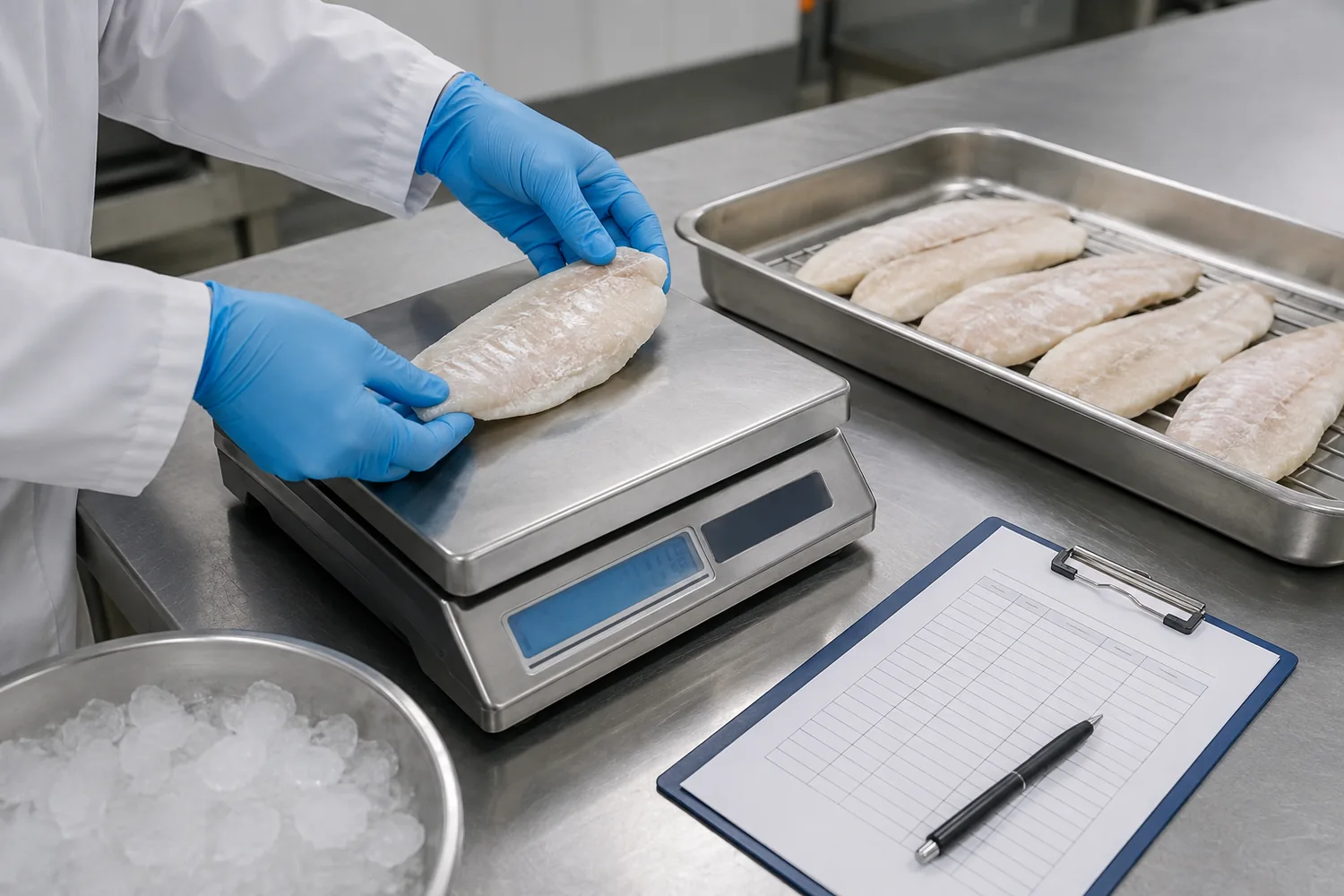
In frozen fish wholesale, glaze is a protective coating of ice applied to frozen seafood. It can help protect the surface during frozen storage, but it is not edible fish. A wholesale comparison must therefore identify whether the stated carton weight includes glaze and which declared net or deglazed basis is being used.
The key question is not “does the product have glaze?” but “how much glaze is specified, how is it assessed, and which weight is used for the price?” Ask the supplier to state the declared glaze percentage and net content clearly. If your contract depends on a test method, name the method and acceptance tolerance.
A practical calculation is:
Estimated deglazed fish weight = glazed product weight × (1 − declared glaze fraction).
For an illustrative 10 kg glazed product quantity with 10% declared glaze, the calculation gives 10 × 0.90 = 9 kg of deglazed fish. This is a purchasing illustration, not a substitute for the applicable official method or an inspection of a specific consignment.
Now compare two hypothetical offers:
| Offer | Glazed weight | Declared glaze | Illustrative deglazed weight | Price | Price per deglazed kg |
|---|---|---|---|---|---|
| A | 10 kg | 10% | 9.0 kg | €45 | €5.00 |
| B | 10 kg | 20% | 8.0 kg | €42 | €5.25 |
Offer B has the lower carton price in this example but the higher calculated cost per deglazed kilogram. Real quotations may use different declared-weight conventions, specifications and commercial terms, so buyers must confirm the basis before applying the calculation.
In frozen fish wholesale calculations, gross weight, net weight, deglazed net weight and usable production yield are not automatically identical. Gross weight may include packaging. Declared net content follows the stated product and labelling basis. Deglazed weight concerns the fish after glaze removal under an applicable method. Usable yield additionally reflects the buyer’s trimming and process losses.
The NOAA seafood grading standards provide useful official background for United States buyers investigating net-weight and quality terminology. A practical IFSQN community discussion on determining ice percentage may help technical teams identify questions, but forum comments are not regulatory guidance.
Record the agreed weight basis in the specification, quotation and purchase order. This is one of the most important protections in frozen fish wholesale sourcing, especially when comparing bulk fish fillets from several suppliers.
6. Define size grade, trim, skin and bone tolerances
For frozen fish wholesale orders, size descriptions must be measurable. Ask whether the range refers to individual piece weight, fillet weight, length, count per carton or another grading system. State the units and permitted variation. A phrase such as “medium frozen fish fillet” is too subjective for a commercial acceptance criterion.
Piece size affects portion control, cooking validation, pack presentation and production speed. A food-service customer may want a narrow weight range; a processor may accept greater variation when material will be cut or mixed. Document the actual business need instead of paying for precision that adds no value—or accepting variation your customer will reject.
For frozen fish wholesale contracts, define skin presentation and allowable remnants. For skinless product, specify how remaining skin is assessed. For skin-on product, identify scale requirements where relevant. Similarly, “boneless” does not mean buyers should omit a bone-tolerance discussion. Agree how pin bones and other bones are defined, sampled and handled.
Trim descriptions may include belly flap, collar, tail, membrane, blood spots or other product-specific features. The relevant items vary by species and cut. Use an approved sample or images only as supporting references; the written specification remains necessary.
For repeat supply, include change control. If size distribution, trim presentation or freezing arrangement changes, decide which changes require buyer approval. Consistency is easier to manage when both parties know which characteristics are contractual and which are descriptive.

7. Specify packaging, labels and cold-chain logistics
For frozen fish wholesale shipments, packaging should protect the frozen seafood, support traceability and suit the receiving operation. Request the number of inner packs, nominal content per inner pack, master-carton configuration, closure method, label information and pallet arrangement where relevant.
Ask whether the quoted carton weight is net fish content on the agreed basis. Confirm how many pieces or inner packs are expected and whether piece count is fixed or approximate. When quotations for bulk seafood use different carton formats, convert them to the same product-weight and logistics basis.
In frozen fish wholesale supply, labels should identify the product consistently with the specification and documents. Depending on the market and business model, relevant fields may include commercial and scientific species name, product form, lot identification, net quantity, freezing information, storage instructions, origin statements and establishment information. The responsible compliance specialist should confirm the exact mandatory content.
Discuss pallet dimensions, carton strength, wrapping, stacking and container loading with the logistics team. A fish wholesaler receiving individual pallets has different handling constraints from an importer receiving a full reefer container. State available unloading equipment and warehouse limitations in the enquiry.
Do not use generated article images as evidence of actual TG-Trading packing. The images in this guide are editorial illustrations. Current packing, labels, palletisation, stock and shipment conditions must be confirmed in writing for the quotation.
8. Request the right documents for the destination
A product specification is the foundation, not the complete shipment file. Required records for frozen fish wholesale depend on species, origin, processing, destination and the buyer’s own controls. Ask the responsible customs, regulatory and food-safety specialists to confirm what is needed before dispatch.
For an EU or Netherlands destination, investigate whether the exporting country and establishment are eligible, which health certification applies and where border controls take place. For Great Britain, check the current approved-country, approved-establishment, health-certificate and border-control requirements. For the United States, the importer must address applicable FDA seafood HACCP responsibilities and other entry requirements.
A frozen fish wholesale commercial file may also include an invoice, packing list, transport document, certificate of origin where required, lot information and product-specific declarations. Sustainability or catch documentation may be relevant in some fisheries and markets. Do not ask a supplier to issue every possible certificate; identify the records applicable to the actual product and destination.
Check names, quantities, lot references and establishment identifiers for consistency across the file. A document can exist while still containing a mismatch that delays clearance or customer acceptance. Agree who reviews drafts before shipment.
Seafood suppliers should be evaluated on their ability to answer specification and documentation questions clearly, not merely on how quickly they send a price. Keep unresolved compliance questions visible until the responsible person has closed them.
9. Compare quotations on equivalent terms
In a frozen fish wholesale comparison, start with technical compliance. Remove or clarify any offer that does not identify the species, cut, size, glaze, weight basis, packaging and destination responsibilities. Only then compare the commercial terms.
Use a worksheet with one row per requirement and one column per supplier. Include the product specification revision, sample status, quantity, packing, price unit, currency, delivery basis, lead time, quotation validity, documents and open questions. Convert every price to the same net or deglazed product basis where appropriate.
For wholesale fish, the cheapest price per carton may not deliver the lowest cost per usable kilogram. Include declared glaze, trim loss, portion yield, labour, rejected pieces, storage and handling. Use measurements from your own controlled trial rather than a generic yield promise.
A wholesale frozen fish offer should also identify what can change. Is the origin fixed? Is the size range guaranteed? Does a packaging alternative change the price? What happens if quantity or destination changes? Ask for a revised written quotation after any material change.
Frozen fish wholesale searches use high-volume terms such as fish wholesale, fish fillets and frozen fish, but the buying decision occurs in these detailed fields. The purpose of the article is to convert that interest into a complete, comparable request.
Buyers comparing salmon formats can continue with our companion guide, Whole Salmon vs Salmon Fillet: Which Format Is Better for Wholesale Buyers? It applies the same specification-led method to yield, labour and processing decisions.
Frozen fish wholesale RFQ checklist
- Buyer name, business type and contact details.
- Intended use: food service, retail, processing or distribution.
- Commercial and scientific species name requested.
- Whole, headed and gutted, loin, steak, portion or fillet format.
- Skin, scales, bones, pin bones and trim requirements.
- Individual size range, count tolerance or other grade.
- IQF, interleaved, block-frozen or other required arrangement.
- Maximum or target glaze and agreed weight basis.
- Inner pack, master carton, label and pallet preferences.
- Trial quantity, expected repeat quantity and requested timing.
- Destination country, port or delivery location.
- Required health, origin, catch, quality and shipment documents.
- Sample-review and specification-approval process.
- Commercial terms and quotation-validity requirement.
Frequently asked questions about frozen fish wholesale
What specifications should a buyer request for frozen fish?
Request the commercial and scientific species name, product form, skin and bone presentation, size range, freezing arrangement, glaze percentage, declared weight basis, packaging, storage instructions and destination-specific documents. Include an approved sample or measurable acceptance method where appearance and trim are important.
What does glaze percentage mean on frozen fish?
Glaze percentage describes the protective ice layer applied to frozen seafood under a stated basis or method. It is not the same as edible fish weight. Buyers should request the declared percentage, test basis and deglazed or net-content information needed to compare offers.
Is glaze included in the net weight?
Do not assume the answer. Weight declarations and regulatory conventions can differ. Ask the supplier to state whether the quoted quantity is gross, glazed product weight, declared net content or deglazed fish weight, then record that basis in the quotation and purchase order.
What is the difference between gross, net and deglazed weight?
Gross weight can include packaging. Net content follows the declared product basis. Deglazed weight concerns the fish after glaze removal under the applicable procedure. Usable yield may be lower again after the buyer trims or processes the fish.
What is the difference between IQF and block-frozen fish?
IQF pieces are frozen individually to support separation, while block-frozen product is supplied as a frozen unit. The most suitable option depends on whether the buyer needs individual portions or plans to thaw and process a larger quantity together.
Which frozen-fish format is best for food service?
There is no universal best format. Compare portion consistency, kitchen labour, trim, cooking validation, pack size and customer presentation. Fillets, steaks or portions may reduce preparation, while other operations may prefer more cutting flexibility.
Does skinless frozen fish automatically mean boneless?
No. Skin and bone specifications are separate. A skinless product can still require a pin-bone or bone-tolerance agreement. Define both fields and the relevant inspection method instead of relying on a general description.
Which documents are needed to import frozen fish?
The answer depends on the species, origin, processing, destination and border regime. Common files can include health certification, commercial invoice, packing list, transport document, origin information and lot records. Confirm the current requirements with the responsible authority and specialists before shipment.
How can buyers compare offers with different glaze percentages?
Confirm the same weight basis, calculate the indicative deglazed quantity and compare price per deglazed kilogram. Then include trim yield, labour, packaging and delivery terms. Use the applicable official assessment method where the contract depends on measured glaze.
What information should be included in a frozen-fish RFQ?
Include species, cut, size, trim, freezing method, glaze, weight basis, packaging, quantity, destination, timing and documents. Explain the intended commercial use and mark which requirements are fixed. This gives frozen fish suppliers enough information to propose a relevant offer.
Request a frozen fish wholesale quotation
Prepare the specification and RFQ checklist, then contact TG-Trading B.V. for a wholesale quotation. Include the required species, product form, size, glaze, packing, quantity and destination so the commercial team can assess the enquiry.
Availability, origin, certification, specification, packaging, timing and commercial terms must be confirmed for the proposed supply. A detailed enquiry helps turn a broad search for frozen fish for sale into a practical B2B sourcing conversation.
