
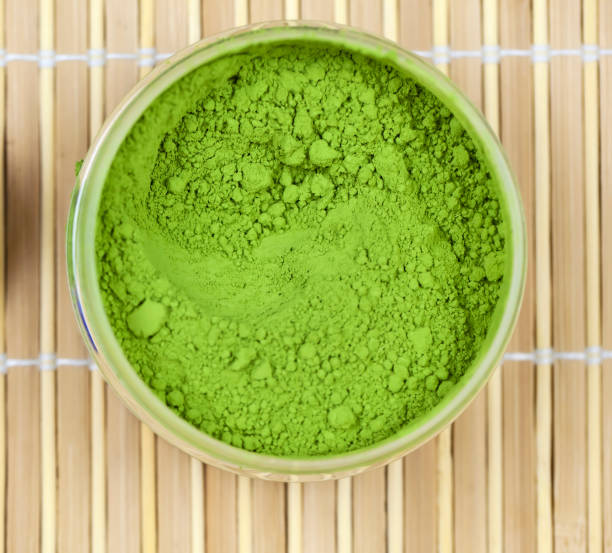


Organic Spirulina Powder
Organic Spirulina Powder is dried, finely milled spirulina biomass supplied by TG-Trading B.V. for food manufacturers, beverage companies, nutrition brands, ingredient blenders, wholesalers and distributors. It can be evaluated for powdered beverages, food blends, snack products, premixes and commercial repacking. Scientific identity, particle size, protein and pigment specifications, microcystin limits, microbiological criteria, organic certification, origin, packaging and other analytical requirements may vary according to current sourcing. Send your quantity, destination and required specification for a wholesale quotation.
Organic Spirulina Powder
Product Details
Organic Spirulina Powder for Wholesale Supply
Organic Spirulina Powder is a dried, finely milled cyanobacterial biomass ingredient supplied for commercial food, beverage, nutrition-product, ingredient-blending and wholesale applications. TG-Trading B.V. supplies Organic Spirulina Powder to international B2B buyers including food manufacturers, beverage companies, nutrition brands, ingredient distributors, wholesalers, contract manufacturers and commercial repackers.
Professional buyers should confirm botanical or organism identity, processing method, color, particle size, moisture, protein or other compositional requirements where relevant, microbiological criteria, contaminant limits, microcystin controls, organic certification, origin, packaging and required documentation before ordering.
The organic designation should only be used where valid certification and traceability documentation support the actual material. TG-Trading B.V. does not assume exact composition, protein percentage, phycocyanin content, certification scheme, origin, GMO status, shelf life, packaging size or analytical values without current supplier documentation.
Organic Spirulina Powder for Wholesale Buyers
Organic Spirulina Powder can be evaluated by food and ingredient manufacturers that require a concentrated green powdered ingredient for commercial formulations.
Beverage manufacturers may focus on dispersibility, color and flavor. Powder-blend producers may prioritize particle characteristics and microbiological quality, while ingredient distributors may require standardized packaging, organic documentation and lot traceability.
Buyers sourcing related botanical and functional powders can also review Organic Maca Powder and the wider Plant Powders category.
What Is Organic Spirulina Powder?
Organic Spirulina Powder is dried biomass commonly produced from cultivated Arthrospira species and milled into a fine green powder.
Commercial spirulina is often associated with Arthrospira platensis, historically also referred to in commercial literature as Spirulina platensis. Scientific identity should nevertheless be confirmed from the actual supplier specification.
For food-safety guidance relevant to cyanobacterial ingredients, procurement and quality-control teams can consult the U.S. Food and Drug Administration:
FDA – Blue-Green Algae Products and Microcystins
The FDA explains that cyanobacterial food ingredients can require attention to microcystin contamination because toxin-producing cyanobacteria may contaminate some cultivation or harvesting environments. This makes analytical controls and supplier quality systems particularly important for professional procurement.
5 Key Commercial Uses
1. Powdered Beverage Formulations
Organic Spirulina Powder may be incorporated into powdered beverages, smoothie mixes and blended drink formulations.
Manufacturers should evaluate color intensity, flavor, dispersibility and interaction with other ingredients before commercial production.
The appropriate inclusion level depends on the finished-product formulation and should not be assumed from generic recommendations.
2. Nutrition and Functional Food Blends
Food and nutrition companies may use spirulina powder as one ingredient in formulated powders, cereal mixes, snack blends and other food products.
Commercial buyers may request specific compositional parameters such as protein content or pigment concentration where these are relevant to formulation.
Any nutritional or health claims made for the finished product should be separately substantiated and comply with the destination market’s regulations.
3. Snack and Bar Manufacturing
Organic Spirulina Powder can be evaluated for snack bars, cereal products, bites and other formulated foods.
Manufacturers should assess flavor, color and processing behavior during product development.
The powder should not be assumed to provide identical sensory performance across suppliers because cultivation and processing conditions can affect the finished ingredient.
4. Ingredient Premixes
Ingredient blenders may combine spirulina with plant powders, proteins, fibers or other food ingredients to create commercial premixes.
For automated blending, buyers may need specifications covering particle size, bulk characteristics, microbiological quality and lot consistency.
5. Wholesale Ingredient Distribution
Wholesalers and ingredient distributors may purchase Organic Spirulina Powder for onward sale to manufacturers, brands and commercial packers.
Distribution programs typically require traceable lots, clear labeling, current organic documentation and specification records suitable for B2B customers.
Specifications Buyers Should Confirm
A professional procurement specification may address:
- Product designation
- Scientific identity
- Species or strain information where applicable
- Cultivation method where relevant
- Processing method
- Drying method where required
- Powder color
- Odor and flavor
- Particle size
- Mesh where applicable
- Moisture
- Protein content where required
- Phycocyanin or pigment specification where required
- Ash or mineral content where relevant
- Microbiological criteria
- Microcystin limits
- Heavy-metal limits
- Residue requirements
- Foreign-material tolerance
- Ingredient declaration
- Additives or carriers if any
- Organic certification
- GMO documentation where required
- Allergen statement
- Packaging format
- Net package weight
- Lot identification
- Country of origin
- Certificate of analysis
- Shelf-life documentation
- Storage instructions
Exact analytical values should always be confirmed from the current product specification and certificate of analysis.
Spirulina Powder vs Spirulina Extract
Organic Spirulina Powder and spirulina extract are not the same commercial ingredient.
Powder generally consists of dried and milled spirulina biomass.
An extract involves further processing to isolate or concentrate particular components, such as color fractions.
This distinction matters for food manufacturers because ingredient identity, composition, functionality and regulatory treatment may differ.
Buyers requiring whole spirulina biomass should clearly specify powder rather than extract in their RFQ.
Scientific Identity
Spirulina has historically been used as a commercial name for biomass associated with Arthrospira species.
Because naming conventions in technical and commercial documentation can vary, buyers should rely on the supplier’s scientific identity statement rather than assuming the exact organism from the front-label product name.
Scientific identity can be particularly important for regulatory review, import documentation and ingredient specifications.
Microcystin Control
Microcystin control is an important quality consideration for cyanobacterial ingredients.
The FDA notes that certain cyanobacteria can produce microcystins and that contamination can occur if undesirable organisms are present in growing or harvesting environments.
Professional buyers should therefore consider requesting analytical information for relevant toxins according to their destination market and internal food-safety requirements.
No universal microcystin value should be assigned to every Organic Spirulina Powder product without reference to the applicable regulation and actual laboratory result.
Heavy Metals and Contaminants
Commercial spirulina buyers may also establish specifications for lead, cadmium, mercury, arsenic or other contaminants depending on destination-market regulations and intended use.
Exact permissible levels vary according to jurisdiction and product classification.
Importers and manufacturers should therefore provide their required limits or reference the applicable market regulation when requesting an offer.
A certificate of analysis may be requested for the actual batch where analytical confirmation is necessary.
Organic Certification Requirements
The term organic is regulated in major international markets.
An Organic Spirulina Powder product should therefore be supported by appropriate certification rather than relying solely on the commercial name.
Buyers should confirm:
- Certification scheme
- Certification body
- Operator or processor identification
- Certificate validity
- Product scope
- Lot traceability
- Import documentation where applicable
- Destination-market labeling requirements
Certification requirements may differ between the EU, United States and other markets.
TG-Trading B.V. should only state a specific organic certification where it is supported by the actual supply documentation.
Color and Sensory Characteristics
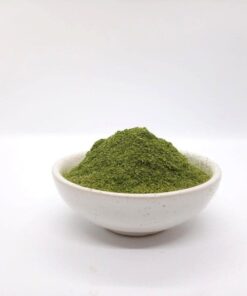
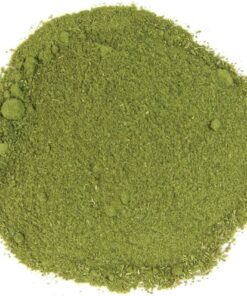
Spirulina powder is commonly green to blue-green in appearance because of naturally occurring pigments.
Exact shade can vary according to organism, cultivation conditions, processing and storage.
Food manufacturers using spirulina partly for visual impact should request a defined color reference or pigment specification when consistency is commercially important.
Flavor and odor should likewise be evaluated against the buyer’s intended formulation.
Protein and Composition
Spirulina is often marketed for its protein content, but an exact protein percentage should never be assumed for a commercial shipment.
Composition can vary according to cultivation, processing and analytical method.
Manufacturers requiring a minimum protein specification should state the value and test method in their purchasing requirements.
The same principle applies to moisture, ash, pigment concentration and other compositional parameters.
Particle Size and Dispersibility
Particle size affects powder handling, blending and dispersibility.
Beverage and premix manufacturers may require finer material, while other applications may tolerate broader particle-size specifications.
Mesh terminology can differ between processors.
Companies operating automated dosing or blending equipment should specify relevant particle-size requirements and conduct application testing where necessary.
Packaging and Bulk Orders
Organic Spirulina Powder may be supplied in commercial ingredient packaging for food manufacturers, brands, wholesalers and distributors.
Packaging depends on supplier, order volume, destination and buyer requirements.
Buyers should confirm:
- Primary packaging material
- Inner liner where applicable
- Net package weight
- Food-contact requirements
- Moisture protection
- Labeling
- Lot coding
- Pallet configuration
- Container-loading requirements
- MOQ
No universal bag size or minimum order quantity should be assumed.
Storage and Handling
Spirulina powder should be handled in a manner that protects the product from moisture, contamination, excessive exposure to light and other conditions that may affect quality.
Exact storage temperature, humidity limits and shelf life should follow the current supplier documentation.
Warehouses should maintain lot identification and use appropriate food-ingredient hygiene and stock-rotation practices.
International Sourcing and Distribution
TG-Trading B.V. lists Organic Spirulina Powder under Plant Powders & Functional Ingredients → Plant Powders.
Availability can vary according to cultivation cycle, processor capacity, organic certification, origin, specification, packaging and destination-market requirements.
International buyers should identify the destination country or port during the RFQ stage so import, organic-certification and labeling requirements can be considered before commercial terms are finalized.
Quality and Documentation
Depending on intended use and destination, buyers may request:
- Current technical specification
- Certificate of analysis
- Scientific identity declaration
- Organic certificate
- Ingredient declaration
- Microbiological report
- Microcystin analysis
- Heavy-metal analysis
- Contaminant documentation
- GMO statement where required
- Allergen statement
- Certificate of origin
- Lot traceability
- Food-safety certification documentation
- Packing list
- Product labeling information
No organic, non-GMO, toxin-free, heavy-metal-free, additive-free or similar claim should be made without appropriate evidence supporting the actual product.
Frequently Asked Questions
What is Organic Spirulina Powder?
Organic Spirulina Powder is dried and milled spirulina biomass supplied under an organic designation supported by applicable certification and traceability documentation.
Which species is used?
Commercial spirulina commonly involves Arthrospira species, including material identified as Arthrospira platensis. Buyers should confirm the actual scientific identity from the supplier specification.
Is spirulina powder the same as spirulina extract?
No. Powder is generally dried whole biomass, while an extract involves additional processing to concentrate particular components.
Does the product contain microcystins?
Microcystin status should be established through appropriate quality controls and analytical testing. Buyers requiring a specific limit should state it in the RFQ.
What is the protein percentage?
Protein content varies according to the actual material and analytical specification. Buyers should request the current certificate of analysis rather than assuming a fixed percentage.
Is Organic Spirulina Powder certified organic?
Organic certification should be verified for the actual product and required destination market. Buyers should state which certification scheme they need.
Can it be used in beverage powders?
Yes. Manufacturers may evaluate it for powdered drinks and smoothie mixes, subject to their formulation, sensory and regulatory requirements.
Is it suitable for ingredient premixes?
Yes. It may be used in commercial ingredient blends where its powder characteristics and specification suit the manufacturer’s formulation.
What packaging is available?
Packaging varies according to supplier, order quantity and destination. Current configurations are confirmed during quotation.
What is the minimum order quantity?
MOQ varies according to specification, organic certification, packaging, destination and current availability.
Why Source Through TG-Trading B.V.?
TG-Trading B.V. supports specification-led international ingredient procurement.
For Organic Spirulina Powder, this means confirming scientific identity, processing format, particle size, composition, microbiological requirements, microcystin controls, heavy-metal requirements, organic certification, packaging, destination and documentation before evaluating current supply.
This approach helps food manufacturers, nutrition brands, ingredient distributors, wholesalers and commercial packers purchase against defined technical requirements rather than unsupported assumptions about purity, composition, health effects or certification.
Request a Wholesale Quote
To request a wholesale quotation for Organic Spirulina Powder, provide TG-Trading B.V. with your required quantity, destination country or port, intended application, scientific-identity requirements, particle size, compositional parameters, microbiological criteria, microcystin limits, required organic certification, packaging and documentation needs.
Also state any mandatory heavy-metal, contaminant, GMO, origin, labeling, food-safety or destination-market requirements.
Contact TG-Trading B.V. for current availability, MOQ, specifications, organic documentation, analytical requirements and commercial pricing.
Be the first to review “Organic Spirulina Powder”
Related products
Plant Powders
Plant Powders
Plant Powders
Plant Powders
Plant Powders

Flours
Starches
Plant Powders
Wholesale Sourcing Specifications: Organic Spirulina Powder
| Order Volume (MOQ) | Europe: Pallets / LCL accepted. International: 1x 20ft or 40ft FCL (Dry or Reefer) |
|---|---|
| Packaging | Varies by product (bulk, retail, private label). Request specific product specifications. |
| Incoterms | FOB Rotterdam / CIF Destination Port / DAP (Door-to-Door available) |
| Lead Time | Varies by product and origin; typically 14 to 21 working days |
| Quote Response | Proforma Invoice and spec sheet within 24 hours of RFQ |
| Quality Governance | BRCGS, IFS Food, ISO 22000, HACCP |
Reviews
There are no reviews yet.