
Uncategorized
Wholesale Frozen Vegetables: The Complete B2B Buyer’s Guide to IQF Sourcing, Cold Chain and Yield Specs
Oct
Wholesale Frozen Vegetables:
When a procurement team in Rotterdam, Dubai or Houston opens a tender for wholesale frozen vegetables, the headline price is only the first line of the evaluation. Behind every competitive quotation sits a chain of technical decisions: the freezing method used, the glaze percentage applied, the net-weight integrity of each carton, the temperature logs of the reefer container, and the certification framework governing the facility that processed the crop. Buyers who ignore these variables pay for ice, waste and rejected containers. Buyers who master them secure consistent, cost-effective supply for years.
This guide is written for importers, food-service distributors, food manufacturers and commercial kitchens sourcing wholesale frozen vegetables from Europe. It explains how Individually Quick Frozen (IQF) technology preserves yield and nutrition, compares frozen and fresh produce on nutrient retention and commercial economics, details the cold chain and documentation standards that govern international shipments, and walks through the specifications of the highest-demand IQF lines available from Trapani Global Trade B.V. (TG-Trading B.V.), a KvK-registered wholesale supplier (CCI 75971305) operating from Lelystad, Netherlands.
By the end of this article you will be able to read any quotation for wholesale frozen vegetables like an auditor: calculating true landed cost per usable kilogram, verifying certification scope, and specifying exactly what your contract must guarantee before a single pallet leaves the port.
What Are Wholesale Frozen Vegetables in a B2B Context?
In commercial trade, wholesale frozen vegetables are vegetable crops harvested, cleaned, cut, blanched where required, and frozen at industrial scale for resale to businesses rather than consumers. Unlike retail packs, wholesale formats are packed in 10 kg or 20 kg bulk cartons, palletized for container loading, and traded against written specifications covering calibre, cut style, defect tolerance, glaze percentage, microbiological limits and shelf life.
The commercial logic behind wholesale frozen vegetables is straightforward. Vegetable crops are seasonal, perishable and geographically constrained. Freezing converts a perishable agricultural product into a stable, tradable commodity that can cross oceans without spoilage, allowing a food manufacturer in January to purchase sweet corn harvested at peak season in August. For buyers, that means price stability, year-round menu consistency and dramatically reduced waste compared with fresh supply.
The global trade in wholesale frozen vegetables is governed by food-safety frameworks rather than goodwill. Serious European suppliers operate under WHO-recognised food-safety principles and certify their operations through schemes such as BRCGS, IFS Food, ISO 22000 and HACCP. When you shortlist wholesale frozen vegetable suppliers, these certifications are not marketing badges; they define the audit trail that protects your business if a container is ever questioned at import.
IQF Freezing: The Technology Behind Commercial-Grade Wholesale Frozen Vegetables
How Individually Quick Freezing Works
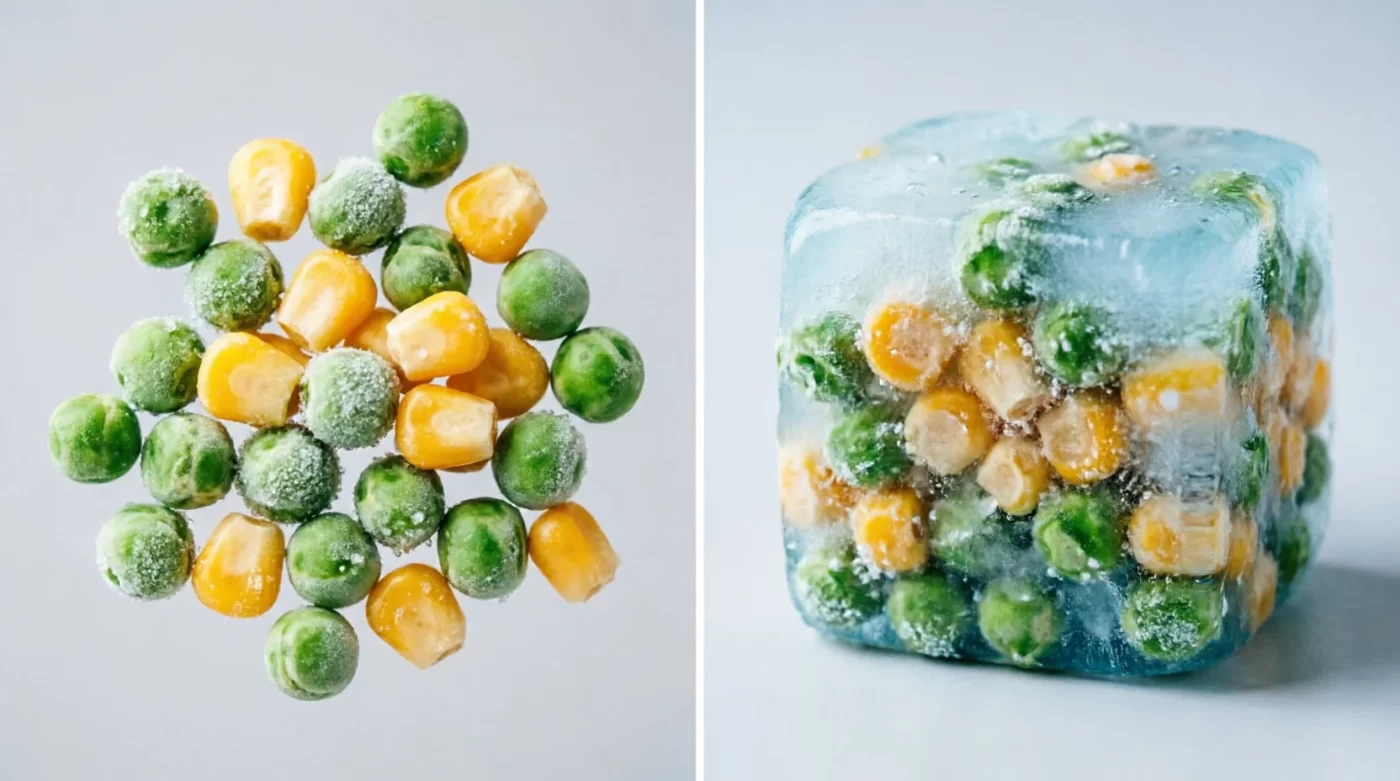
IQF stands for Individually Quick Frozen. In an IQF tunnel, separate pieces of vegetable move on a conveyor through blast air at -30°C to -40°C. Because each piece freezes alone within minutes, ice crystals form small and inside the cell walls, preserving cellular structure, colour, texture and drain weight after thawing. The process is a commercial application of flash freezing principles, and it is the reason IQF peas pour freely while block-frozen peas arrive as a single brick.
For B2B buyers of wholesale frozen vegetables, IQF delivers three operational advantages: exact portion control (you use precisely the weight you need), consistent cooking behaviour across batches, and higher usable yield because product never needs to be thawed and broken apart before processing. In tender comparisons, these advantages routinely outweigh a higher headline price per kilogram.
IQF vs. Block Frozen: A Yield and Cost Comparison
Block freezing submerges vegetables in water and freezes them into solid slabs. It is cheaper to produce but forces the buyer to thaw the entire block, accept breakage, and lose drain weight. The table below shows why most food-service and manufacturing buyers specify IQF when purchasing wholesale frozen vegetables despite the price differential.
| Criterion | IQF Frozen Vegetables | Block Frozen Vegetables |
|---|---|---|
| Freezing method | Blast tunnel, pieces frozen individually | Static or plate freezing in water block |
| Portion control | Exact weight per use, no thawing required | Full block must be thawed |
| Usable yield | High (typically 95-99% of net weight) | Lower (breakage and drip loss) |
| Product integrity | Whole, separate pieces | Fused mass, damaged pieces |
| Best application | Food service, retail packs, precision manufacturing | Further processing into purees and sauces |
| Commercial verdict | Lower cost per usable kg for wholesale frozen vegetables in most applications | Only where structure is irrelevant |
Frozen vs Fresh Vegetable Nutrients: The Nutrient Comparison B2B Buyers Need
Why “Fresh” Degrades Before It Arrives
The word “fresh” carries a health halo that commercial supply chains rarely deserve. A vegetable harvested at dawn begins losing vitamin C, folate and antioxidants the moment it is cut. Between harvest, packing, distribution, retail display and your kitchen, fresh produce routinely spends five to fourteen days in transit and storage, during which enzymatic activity and light exposure steadily degrade micronutrients. Public nutrient databases such as USDA FoodData Central document measurable vitamin losses in refrigerated fresh produce within days of harvest — a degradation curve that buyers of wholesale frozen vegetables simply opt out of.
What the Science Says About Nutrient Retention
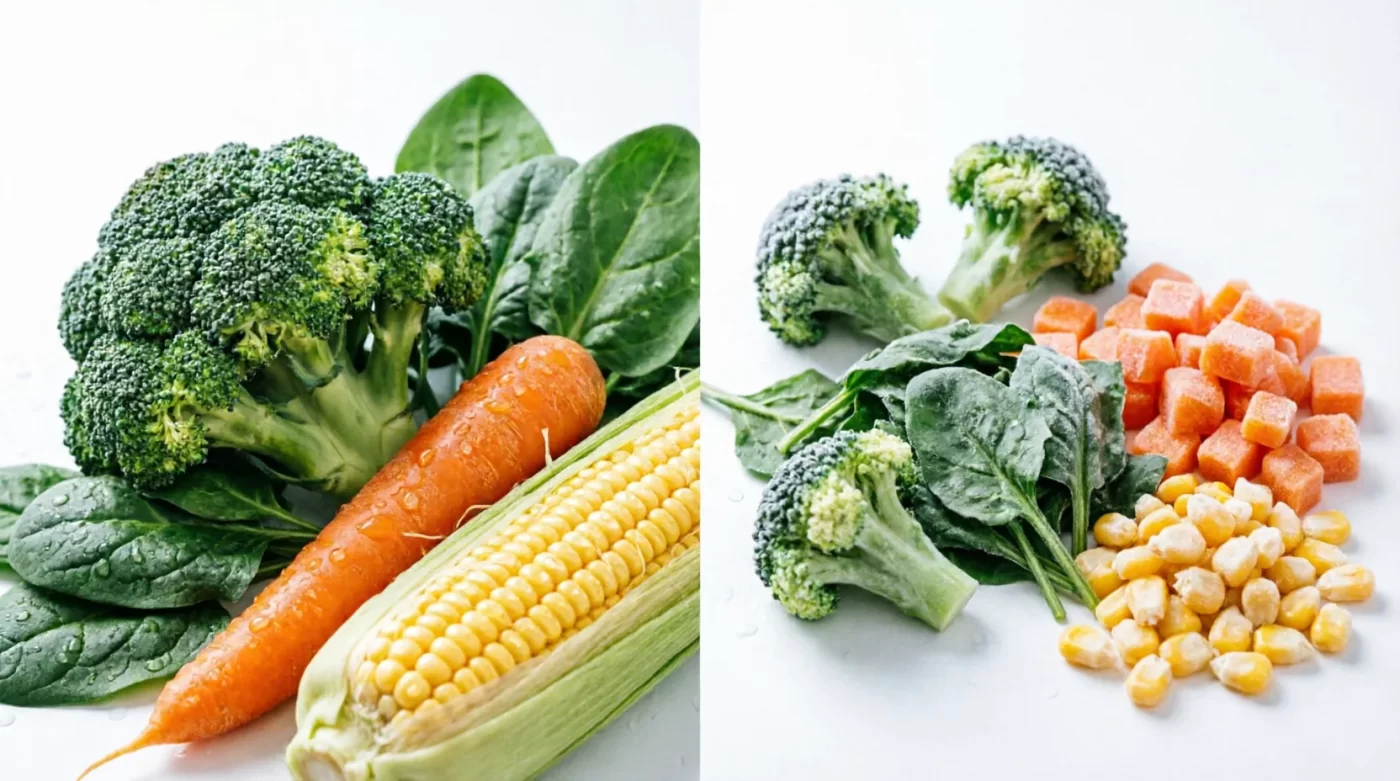
IQF freezing interrupts that degradation curve at its best point. Vegetables destined for freezing are processed within hours of harvest, blanched to inactivate enzymes, and frozen at peak ripeness. Blanching causes a small, one-time loss of water-soluble vitamins, but after that point nutrient levels remain remarkably stable for months at -18°C. European food-safety science reviewed by bodies such as the European Food Safety Authority (EFSA) supports the conclusion that wholesale frozen vegetables are nutritionally equivalent to, and in several micronutrients superior to, aged fresh produce.
| Nutrient factor | Fresh (7-14 days post-harvest) | IQF Frozen (at -18°C) |
|---|---|---|
| Vitamin C | Declines steadily with time, heat and light | Locked at harvest level after blanching |
| Folate & B vitamins | Significant losses during storage | Stable across shelf life |
| Antioxidants | Degrade with ripening and display lighting | Preserved by rapid freezing |
| Macronutrients & fibre | Stable | Stable |
| Microbiological safety | Requires continuous refrigeration | Inhibited at -18°C per FAO food-safety guidance |
Commercial Implications: Waste, Shelf Life and Cost-per-Portion
Nutrition is only half the argument. Commercially, wholesale frozen vegetables eliminate the spoilage tax. Fresh produce shrink in food service routinely runs 10-25% of purchased weight; frozen shrink approaches zero because product is stored frozen until use. Add 18-24 month shelf life, fixed portion weights and no peeling or trimming labour, and the economics shift decisively.
Modelled over a full year, the cost-per-usable-portion of wholesale frozen vegetables beats fresh in almost every high-volume application. This is why institutional kitchens, airline caterers and food manufacturers anchor their menus on frozen supply and reserve fresh produce for garnish and seasonal specials.
Cold Chain Logistics for Wholesale Frozen Vegetables
Reefer Containers, Temperature Standards and Logging
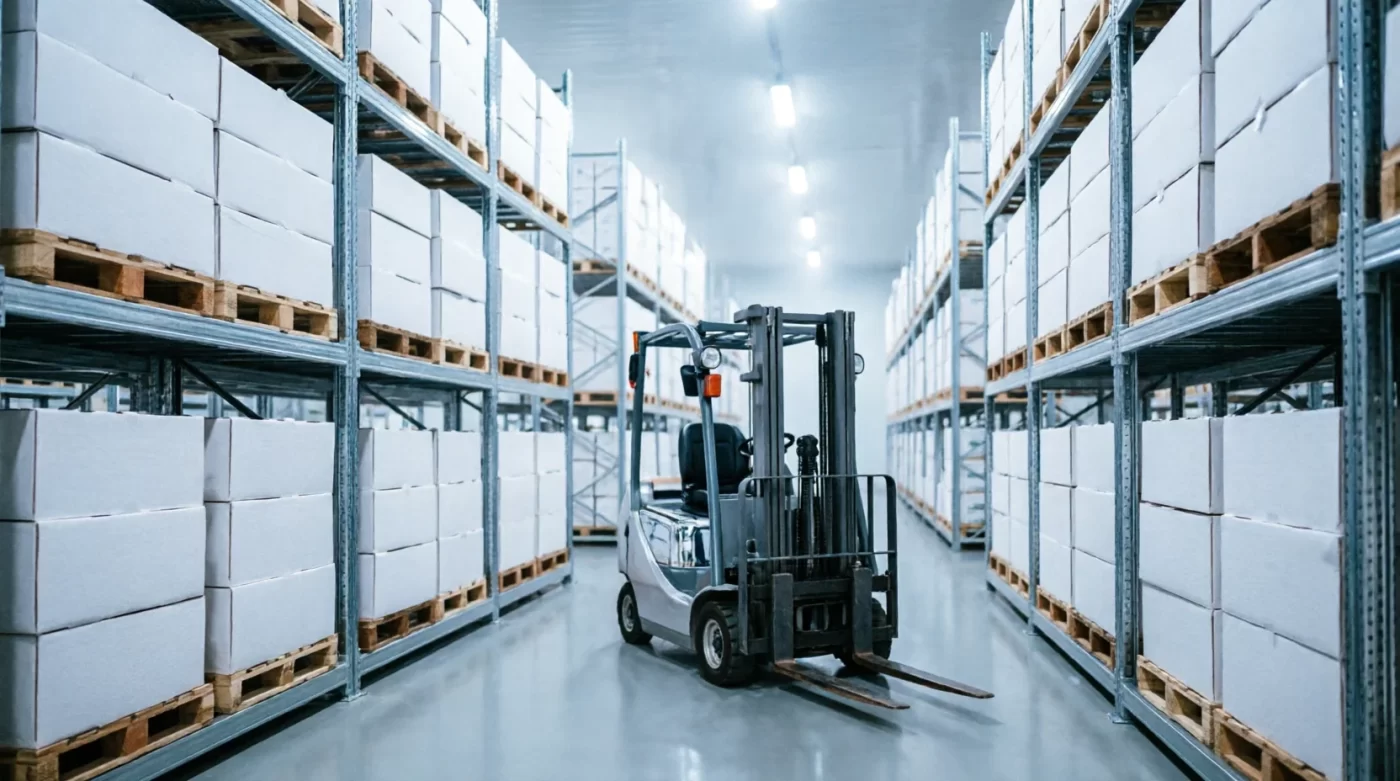
International shipments of wholesale frozen vegetables move in refrigerated (“reefer”) containers set to -18°C or colder, per international frozen-food transport practice. A properly managed cold chain includes pre-cooling of the container before loading, continuous temperature recording throughout the voyage, and downloadable data logs delivered with the shipping documents. Buyers should require these logs contractually: a temperature excursion of even a few degrees over days causes recrystallisation, clumping and drain-weight loss that voids the specification you paid for.

Phytosanitary Certificates and EU Import Documentation
Vegetable products crossing borders carry a documentation pack: commercial invoice, packing list, bill of lading, certificate of origin, health or phytosanitary certificate depending on product class, and for EU-bound goods, compliance with EU food-chain import requirements. A professional supplier of wholesale frozen vegetables prepares this pack before vessel departure so your broker can pre-clear customs. Missing paperwork, not product quality, is the most common cause of costly port delays in wholesale frozen vegetable imports.
Packaging Standards for Bulk B2B Orders
Standard packaging for wholesale frozen vegetables is a food-grade polyliner inside a 10 kg or 20 kg export carton, stacked on EUR or CP pallets, stretch-wrapped and corner-boarded for container loading. Private-label buyers can specify printed retail packs, branded cartons or custom case configurations. Packaging specifications should be fixed in the purchase contract alongside the product specification, because carton strength and liner integrity directly affect frost formation and product condition on arrival.
Sourcing the Core Lines: Specifications and Applications
The lines below represent the highest-demand wholesale frozen vegetables in our catalogue. Each summary includes the commercial application and the specification points buyers should confirm before ordering. Full specification sheets are issued with every quotation.
IQF Okra and IQF Molokhia: Specialty Lines for Middle Eastern, African and Asian Markets
Okra and molokhia are cornerstone vegetables across Middle Eastern, North African and South Asian cuisine, and both freeze exceptionally well under IQF processing. Whole and cut IQF okra is specified by pod length and cut style for gumbo, stews and retail packs, while IQF molokhia (whole leaf or chopped) serves the frozen-leaf market where fresh supply is seasonal and fragile. Both lines demand strict calibre sorting and low tunnel temperatures to preserve the mucilage texture that defines the eating experience in these wholesale frozen vegetables.
Sourcing okra or molokhia? TG-Trading B.V. supplies graded, cut-and-cleaned IQF okra and molokhia in 10 kg bulk cartons for pallet and FCL export, with specification sheets issued within 24 hours of your RFQ for these wholesale frozen vegetables. Request a quote.
IQF Sweet Corn and IQF Edamame: High-Volume Lines for Food Service and Manufacturing
Sweet corn kernels and edamame are among the fastest-moving bulk lines in global food service, appearing in ready meals, salads, stir-fry mixes and snack formats. IQF sweet corn is traded on kernel integrity, colour score and tenderness grade, while IQF edamame is specified shelled or in-pod with tight size grading for retail and restaurant use. Both products are blanch-sensitive: over-blanching destroys texture, under-blanching allows enzyme activity, so supplier process control is the real differentiator in these wholesale frozen vegetables.
Need consistent kernel supply? We offer sweet-grade IQF sweet corn and shelled edamame in bulk cartons for manufacturers and commercial kitchens, with FCL pricing on request for these wholesale frozen vegetables. Request a quote.
IQF Artichoke Hearts and IQF Vine Leaves: Premium Mediterranean Lines
At the premium end of the category, IQF artichoke hearts and quarters serve deli, catering and retail programs where structural integrity and colour retention command price premiums. IQF vine leaves supply the stuffed-leaf market year-round, replacing seasonal brined supply with a cleaner-label frozen alternative. These wholesale frozen vegetables require gentle handling, precise blanching and careful glaze control to keep leaves whole and pliable after thawing.
Building a Mediterranean range? Our IQF artichoke hearts and vine leaves are sourced for whole-leaf integrity and colour retention, packed for retail and catering programs of these wholesale frozen vegetables. Request a quote.
IQF Pumpkin, IQF Colocasia and Specialty Vegetables: Differentiation for Retail Brands
Retail brands increasingly differentiate with specialty wholesale frozen vegetables that fresh chains cannot supply consistently. IQF pumpkin cubes serve soup, baby-food and bakery manufacturers, while IQF colocasia (taro) addresses Caribbean, African and Asian diaspora markets with year-round availability. These lines reward buyers who specify cut size and dry-matter content early, because processing windows are short and crop allocation is competitive. Browse the full range in our IQF frozen vegetables category.
Launching a specialty SKU? We source IQF pumpkin, colocasia and other specialty wholesale frozen vegetables against your cut specification, with private-label packing available. Request a quote.
Frozen Potato Products: Fry-Colour Stability for Commercial Kitchens
Frozen potato products are a category of their own within wholesale frozen vegetables, traded on dry-matter content, sugar balance and fry-colour stability after freezing. Our frozen potato products range includes IQF french fries and crinkle cut fries blanched and pre-treated for consistent golden colour in high-throughput fryers — the specification point that separates professional product from retail-grade fries.
Frying at volume? Our blanched, pre-treated frozen potato lines hold fry colour in commercial fryers, packed for food-service cartons and FCL programs of these wholesale frozen vegetables. Request a quote.
How to Evaluate Wholesale Frozen Vegetable Suppliers
Certifications: BRCGS, IFS Food, ISO 22000 and HACCP
Certification status tells you whether a supplier’s food-safety claims are audited or asserted. BRCGS and IFS Food certify trading and processing operations against globally recognised standards; ISO 22000 structures the food-safety management system; HACCP governs hazard control at critical points. Ask which entity holds each certificate, its scope, and its expiry date, and verify that the scope covers the wholesale frozen vegetables you are buying. TG-Trading B.V. governs its food lines under BRCGS, IFS Food, ISO 22000 and HACCP frameworks, with certificates shared during supplier onboarding — see our quality assurance page for the governance model.
MOQs, Incoterms and Glaze: Reading a Quote Like an Auditor
Three numbers decide whether a quotation for wholesale frozen vegetables is cheap or expensive. First, glaze percentage: a 10% glaze means 10% of gross weight is protective ice; compare quotes on net weight, never gross. Second, MOQ structure: European buyers should expect pallet and LCL flexibility, while international programs typically move as 20ft or 40ft FCL in dry or reefer containers depending on product. Third, Incoterms: FOB Rotterdam places ocean freight on the buyer, CIF delivers to your destination port, and DAP delivers to your door. A supplier who quotes all three transparently understands your logistics reality.
Why Buyers Source Wholesale Frozen Vegetables from TG-Trading B.V.
Trapani Global Trade B.V. (trade name TG-Trading B.V.) is a Dutch-registered wholesale supplier (KvK 75971305, VAT NL860462845B01) with 14 years of hands-on trading experience behind the entity, an in-house team of 13 professionals, and an operational hub in Lelystad, Netherlands, positioned within Europe’s frozen-food logistics corridor. We supply wholesale frozen vegetables, fruits, proteins, grains, oils and dairy powders to buyers across Europe, the Americas, the Middle East, Africa and Asia, under FOB Rotterdam, CIF and DAP terms, with specification sheets and proforma invoices issued within 24 hours of every RFQ. Our annual accounts are filed publicly with the Dutch Chamber of Commerce — transparency we treat as a feature, not a formality, and a verification step every buyer of wholesale frozen vegetables should demand from any supplier.
Frequently Asked Questions: Wholesale Frozen Vegetables
1. What is the difference between IQF and block frozen vegetables?
IQF vegetables are frozen individually in a blast tunnel so pieces remain separate, preserving texture, portion control and usable yield. Block frozen vegetables are frozen together in a solid slab with water, which is cheaper to produce but forces full-block thawing, breakage and drain-weight loss. Most food-service and retail buyers specify IQF; block freezing suits further processing into purees.
2. Are frozen vegetables as nutritious as fresh vegetables?
For commercial supply chains, usually yes and often better. IQF vegetables are processed and frozen within hours of harvest at peak ripeness, locking in vitamins and antioxidants. “Fresh” produce loses micronutrients across days of transport, storage and display. Public nutrient data and EFSA-reviewed science support frozen produce as nutritionally equivalent or superior to aged fresh produce.
3. What temperature must wholesale frozen vegetables be stored and shipped at?
International practice requires -18°C or colder throughout storage and transport. Reefer containers are set accordingly and carry continuous temperature logs. Buyers should contractually require those logs with the shipping documents, because temperature excursions cause recrystallisation, clumping and yield loss.
4. How do I calculate true cost when comparing quotations?
When comparing quotes for wholesale frozen vegetables, compare on net usable weight, not gross. Subtract the glaze percentage from gross weight, add freight and duty under the quoted Incoterm, then divide by usable kilograms. A lower headline price with higher glaze frequently costs more per usable kilo.
5. What is a normal glaze percentage on IQF vegetables?
Glaze typically ranges from 5% to 15% depending on product and protection required. The correct question is not “how much glaze” but “is the glaze declared, consistent and verified against net weight on arrival”. Undeclared glaze is a red flag in supplier evaluation.
6. What certifications should a European frozen vegetable supplier hold?
Look for BRCGS or IFS Food certification of the trading or processing operation, an ISO 22000 food-safety management system, and HACCP hazard control. Verify the certificate holder, scope and expiry, and confirm the scope covers your product lines.
7. What are typical MOQs for wholesale frozen vegetables?
Within Europe, professional suppliers work with pallet and LCL quantities. International programs typically require one 20ft or 40ft container, dry or reefer depending on product. MOQs should be confirmed per product because crop allocation and packing configurations differ.
8. Which Incoterms are used for frozen vegetable exports?
FOB Rotterdam, CIF destination port and DAP door delivery are the standard structures. FOB suits buyers with their own freight contracts; CIF and DAP suit buyers who want the supplier to manage ocean logistics. Confirm who bears risk transfer and insurance in each case.
9. What documents accompany an international frozen vegetable shipment?
Commercial invoice, packing list, bill of lading, certificate of origin, health or phytosanitary certificate as applicable, temperature logs, and certification copies on request. EU-bound shipments must additionally satisfy EU food-chain import requirements.
10. How long is the shelf life of IQF frozen vegetables?
Wholesale frozen vegetables typically keep 18 to 24 months from production when held continuously at -18°C. Shelf life should be stated on the specification with the production date coding system, so you can verify remaining life on receipt.
11. Can I private-label wholesale frozen vegetables?
Yes. Private-label programs specify printed retail packs, branded cartons or custom case configurations alongside the product specification. Confirm artwork lead times, minimum run sizes and label compliance for your destination market before committing.
12. What is the difference between net weight and drain weight?
Net weight is the declared product weight including glaze; drain weight is the weight after glaze is removed under standard conditions. Specifications for premium lines should state both, because drain weight is the weight you actually cook and sell.
13. Why do food manufacturers prefer IQF over fresh for processed products?
IQF delivers year-round consistency, fixed portion weights, zero spoilage shrink and no peeling or trimming labour. That stability simplifies costing, production planning and menu engineering in ways seasonal fresh supply cannot match.
14. How quickly can I get a quotation and specification sheet?
From TG-Trading B.V., proforma invoices and specification sheets are issued within 24 hours of an RFQ. Fast, documented quoting is itself a supplier-quality signal: it reflects organised crop allocation, pricing discipline and logistics planning.
15. How do I verify that a frozen vegetable supplier is a real, accountable company?
Check the legal entity in a public business register. Trapani Global Trade B.V. is registered in the Dutch Business Register under CCI 75971305, files annual accounts publicly, and publishes its registered address and leadership. Any supplier unwilling to expose verifiable registration details should be excluded from your tender list.
Conclusion: Specify First, Price Second
The buyers who win in the wholesale frozen vegetables market are not the ones chasing the lowest headline price; they are the ones who specify freezing method, glaze, drain weight, temperature logging and certification scope before they ask for a number. Master those variables and every quotation for wholesale frozen vegetables becomes comparable, every container becomes predictable, and every menu item becomes costable. If you are ready to put those specifications to work, request a quote from TG-Trading B.V. and receive your specification sheet and proforma invoice within 24 hours — or explore the full catalogue in our shop and our wider buyer guides on the blog.
